

This is exactly what I’ve been saying all along…

On Sunday, The New York Times ran an essay called “The Almighty Essay” about why the college application essay (aka the personal statement) is so important to admissions officers.
The author, a frustrated dad named Trip Gabriel who a journalist and the parent of twins who are juniors in high school, wondered why so much importance is placed on these essays, especially when students are not taught how to write them in high school. (College counselors say the essay is viewed as the main place in the application process where a student’s own voice can be heard and expressed.)
This dad, who is very bugged about how much value colleges place on these essays, especially the most competitive one, wrote:
“What if, like most 17-year-olds, a high school senior sounds wooden or pretentious or thunderously trite when trying to express himself in the first person? Prose in which an author’s voice emerges through layers of perfectly correct sentences is the hardest kind of writing there is. Plenty of professional authors can’t manage it. How reasonable is it to expect of teenagers?”
I totally agree with this dad, at least on this point. And not to pat myself on the back too much, this is exactly what I have been talking about in my blog and the reason I write it: To help students learn to write about themselves–to discover a compelling topic and focus their points–and find their first-person voice and strike a more casual tone.
I won’t get into the argument of how fair it is to rely on these essays to decide who should get into college and who should not. In my opinion, the main reason these essays are so stressful is that no one has given students the tools to write them. As I’ve advised many times in this blog, I believe the best way to write a personal statement and naturally find a pleasing voice is to tell a story. Click this to link to some of my posts on how to tell a story in an essay.
Anyway, here’s the entire article (I took the liberty of bolding the parts I agree with the most):
Length matters…(kidding aside!)
College Applications Essays
Stick the Word Count–ALWAYS!
Most of your college admissions essay prompts have word limits. They tell you what is too long (example: maximum 500 words) or what is not long enough (example: minimum 250 words). Some ask you to stick to the number of characters, as opposed to words. Characters are the number of letters, punctuation marks and spaces in between. To get a “word count” in a Microsoft Word file, just go up to your tool bar and select “Tools,” and then “Word Count,” and you can get the number of words. Counting characters is a bit harder (Baylor University, for example, uses character counts for their essays).
Here are a couple of helpful Web sites that have calculators where you can copy and paste your essay to determine how many words and/or how many characters. I think it’s worth checking and re-checking to make sure you follow the word or character count guidelines–if nothing else, it tells colleges that you can follow directions.
Here are the sites. Just copy and paste your college admissions essays or personal statements to get the counts:
https://allworldphone.com/count-words-characters.htm
https://www.internetbasedmoms.com/freebies/word-count.htm
If you have any better Web sites for this, please share them in the comment box. Thanks!!
HOT OFF THE PRESSES!!! This coming year, 2011-2012, the word count requirement for the Common Application essay has CHANGED! It used to just say the essay needed to be longer than 250 words. Now they also require you to cap it at 500. So if you are smart, don’t dare go over 499 words!! If nothing else, staying within the limits on your college admissions essays and personal statements demonstrates that you can follow directions.
If you need more help and are just getting started on your college essays, try my helpful Jumpstart Guide.
If any of these tips and advice helped you with your college essay,
please take a few seconds and use bottons below to share this post and my helpful blog!
Thanks for your help!
Before You Push the Button

College Admissions Essays:
How To Fine Edit Your College Application Essay
You are finally finished with your essay. It’s time to copy it into the online application and send it off. You’ve worked hard. Why not make sure it’s fabulous? Follow this checklist to double check that it’s as good as it should be:
- Read your prompt (the question) one more time. Often a prompt will ask you to answer more than one question, or address several points. Make sure you address or answer them all!
- Did you make your point? (Yes, that’s the same thing as your “main point.”) You should be able to state it in a sentence or two. And it should be stated somewhere in your essay as well. If you can’t do this, chances are your essay is too broad, and too broad means boring.
- Do you prove the (main) point you are making in your essay? Did you provide examples as “evidence”?
- When you give examples in your essay, or describe something, are you specific? Use details!
Should You Title Your College Application Essay?

College Admissions Essay
Title or No Title?
I like titles. But they need to be good. A title should be short and witty. Not cutesy. The tone of the title and essay should match. The best ones don’t give away too much about the essay, and only hint at what’s to come. Do not use questions. And don’t even think about a title that sounds anything like “My College Admissions Essay.”
Now, how do you think of a title, a good title? Brainstorm ideas by playing off words that link to your theme, message or topic.
Example: A student wrote an essay about how he broke his wrist playing football, and how he learned more about the game sitting on the bench that season. Theme: How bad things can result in good things/How you can learn from a new perspective. (This “theme” is also a Universal Truth or “life lesson”. Check out this post on Universal Truths to see if you have one hidden in your essay.)
Make a quick list of words from the essay that you could play around with: break, benched, football, sports, view, injury, hurt, new perspective…Let yourself “free associate,” which means you list key words and sayings that come to mind when you say one of them, such as “break.” Try the word in different tenses, in common phrases, in pop culture phrases (titles of movies, books, songs, etc.) and even clichés can work. Also, skim your essay for catchy phrases that might work. Try mixing up a couple keys words to make your own phrase. You can also use the Internet to brainstorm ideas–just Google your keywords or phrases. Have fun with it.
Breaking Away (movie title)
The Big Break
Breaking Up
Describe the World You Come From…
UPDATE: The University of California announced NEW essay prompts for 2016-17. Read about how to answer them HERE.
This post is now outdated. The information is no longer relevant!!

College Admissions Essays
How to Answer Prompt #1 for the College Application Essay
for the University of California:
“Describe the World You Come From”
Only read this if you are applying to a UC (University of California school, such as UCLA, Berkeley, Santa Barbara, San Diego, Irvine, Santa Cruz, etc.).
There are two college essay prompts for their required personal statements for incoming freshmen.
Here is some advice regarding the first one:
Prompt #1 (freshman applicants)
Describe the world you come from — for example, your family, community or school — and tell us how your world has shaped your dreams and aspirations.
Read this closely. Note that it asks you to describe one thing and then tell about another–so there are two points you need to address in your essay.
When you describe the world you come from, think of this in a figurative sense.
Do not just write about your hometown.
Instead of the word “world,” try substituting it for the word “community” or “background.”
As a “community,” almost anything can be your world (a mini-community of shared activities, people, passions or places), from your yoga class to your bedroom to your job washing dishes to your grandmother’s kitchen making tortilla soup to your two moms.
It’s wide open. Just pick a topic.
Also, the examples they give, “family, community or school” are just that, examples.
Do not write a little about each of these.
And do not just write about “my family” or “my school.” Way too broad.
Write about your uncle’s magic shop in an underprivileged neighborhood, or the Scrabble club you started at your school even though you are the world’s worst speller, or the old movie theater in your town where you first fell in love with cinema and the power of a visual story.
(Check out the link at bottom of this post to my Tumbler blog with images and quotes to spark ideas for what makes your world.)
Quickie World-As-A-Community-Finder: What do you like/love to do? Where do you do it? Who do you do it with? Bingo! You have just landed on one of your worlds!
Another way to think about your world would be to show how your background has been challenging on some level–and how that has shaped and defined who you are.
In a way, your world is your life with its unique set of issues, obstacles or challenges.
Think of the saying: “Welcome to my world.”
If you have one piece of your life that shapes your “world” in a major way—something from your personal, cultural, educational, etc. background—and that colleges would understand you better if they knew what that was like, consider writing about it.
Examples:
The world of living with two gay dads.
The world of living with an autistic sister.
The world of living with a bi-polar mom.
The world of living with immigrant grandparents.
The world of living on food stamps.
The world of living with perfectionists/slobs/religious nuts/alcoholics/seven siblings/foster home/military parents/home-schooling/white parents and you are asian/constant moving/famous mom, etc.
To write this type of “world” essay, pick a real-life example of a “time” in your life/world when that issue affected you, start your essay describing that specific incident or moment, then go into how dealing with that reality has affected you.
You might be surprised what comes out of you–and how it makes you feel.
I have had students who have written about almost all of these “life” issues.
Their essays have been intense and often soul-searching, but also memorable and meaningful.
Although I think the bulk of your college application essay should focus on this world, and how it has affected you, also address the second part about your dreams and aspirations.
This has the potential to be general and boring, so make sure to talk specifically about how you will apply the lessons (values, skills, ideas, insights, etc.) you have learned in your world to your future.
(Hint: It wouldn’t hurt if you can show how these dreams and aspirations link to your specific college goals. For example, if your “world” is hanging out in your parent’s garage fixing an old truck, mention how the problem-solving skills you learned there will help your aspirations to be some type of engineer one day.)
If you are one of those A-type overachievers (hey, it’s OK, these UCs are insanely competitive!) who still feels insecure about understanding the UC prompts, check out this 50-minute video of a counselor guru spelling it all out at a convention for college admissions folks.
Just don’t let her freak you out too much. Definitely good info here, but I say overkill.
It’s also from 2007, though prompts are the same. Your choice: https://www.youtube.com/watch?v=6zo6NI4wHf4&feature=related

Here are some more helpful posts for answering UC Prompt #1:
- Best thing to help you with your Describe the World You Come From essay is to read SAMPLE UC PROMPT 1 ESSAYS!
- Make sure that you SHOW the World You Come From by describing the setting.
- MY MOST RECENT WORLD POST! Check out some of the comments from other students trying to figure out a “world” to write about in their UC essay in A Peek into the Many World of Prompt 1, where I share some of the questions students asked me to see if their world was interesting, or would make a great essay. Reading through these comments is a GREAT WAY TO FIND YOUR OWN WORLD TO WRITE ABOUT! (Yes, I was shouting at you!)
- Need help for UC application essay Prompt #2: “Tell about a personal quality, talent, accomplishment, …”
- This post can help you write your 650-word essay for the new Common Application.
- Need help getting started? Here’s my sure-fire brainstorm guide: Jumpstart Your College Essay.
- Still need a memorable topic for your college admissions essay? Here are some great posts to help you brainstorm: Twilight as a Topic? and Five Hot Topic Tips.
- Need help writing a “grabber” introduction for your college admission essay? Read this post, How to Write an Anecdote.
- Best for last: You must check out this super helpful Tumbler blog that uses images to help you find your “world” for your college application essay!***
- Here is a post by another essay “expert,” Allen Grove, who shares his ideas in Tips for Writing about UC Personal Statement Prompt 1 for About.com.
- The various UCs all seem to have slight variations on exactly what they look for in these personal statements. This personal statement guide is from UCLA’s admissions department; this personal statement guide is from UC Davis; this personal statement guide is from Berkeley.
See if this video from the UC Admissions Department helps.
I think it might give you an idea of what they want from the two personal statements, but not a lot on how to deliver it. That part is left up to you, as far as I can tell.
(Tips from video: “Be thoughtful, clear, succinct and provide depth.” “Just be honest.” “Focus on a strength.” “Write about what makes you different.” “I wrote from my heart.” All great stuff—the only thing missing is any direction, instruction or support for students on how to do all this in 500 words.)
*Also, if you are still looking for a “world” to write about, there are lots of ideas in the comments. Definitely worth scrolling through to see what others are thinking of writing about. Thanks for sharing all your ideas!
I believe you can write these UC essays on your own. But if you feel like you would like my personal help with them or other college application essays, find details on my Services page.
Best of luck! Janine Robinson

So stressed you can’t even start? Let me talk you down…

College Application Essays:
They Are Easier Than You Think!
A friend just told me his daughter was not going to apply to the UC (University of California) schools because she would need to write two college admissions essays.
Instead, she was going to stick to the Cal state schools, which don’t require essays.
What a tragedy, I thought.
These aren’t that hard to write!!
Here’s what I would say to try to change his mind, and tell his daughter:
These college application essays (also known as personal statements) don’t have to be perfect.
Shoot for mediocre if it takes the pressure off. Just find a little story to tell about yourself, something that happened one time, and pound it out.
Stick to the first person; describe what happened.
Then, explain what it meant to you, how you thought about it, what you learned, how it changed you (even if just a little bit.)
Voila! An essay!
That’s it!
Of course, if you can go back, re-read it, take out the boring parts, amp it up with colorful details, cut extra words, carve out a main point, read it out loud, listen to the flow, find a nifty metaphor to life, allude to interesting ideas, fix it up, work on it—you will have an even better essay.
And did I mention all my other informative posts on this blog are designed to help you write a killer essay?
(Look for specific topics in the “Find Help By Topic” listing on the right.)
Check out my super helpful Jumpstart Guide to help get you started on your college application essay or personal statement!
Lady Gaga as a Topic?

College Application Essays
How Far Out Should You Go?
Interesting post on the New York Times’ blog on college admissions, called The Choice.
The article was about whether to include your random interests–ranging from an obsession with Lady Gaga to riding 100 bus routes in Seattle to a collection of old National Geographic mags–in your college applications.
The post quotes college counselors advising students to include their “hidden extracurriculars” in the “interests” section, as though that’s really radical. Depending on the interest, I believe it could work best as an essay topic.
In my opinion, what you care about, and spend your time pursuing, tells more about you than recounting your mission trip to Costa Rica or the time you won the big cross country race.
If you write an essay about an offbeat topic (a passion, an obsession, a hobby…), chances are you not only will reveal a telling piece of your personality, but also show the reader how you think and what you value.
WARNING: Do not simply try to be cute, odd or quirky. Not matter how offbeat your topic, make sure your points remain serious and thoughtful. Show restraint.
Check out these 5 Top Tips on Finding Topics.
(Personally, I would avoid a sensational topic such as Lady Gaga, since she is distractingly bizarre and it would be hard to keep your focus on serious issues.)
Check out this post to find my super helpful brainstorm guide on finding topics for your college application essays! Good luck!
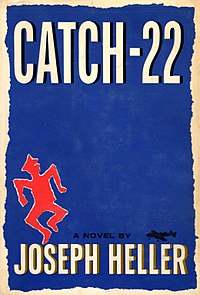
The Catch-22 of College Admissions Essays
 It feels like a set-up. First, you are supposed to reveal how wonderful you are in 500 words–about the number you can cram onto a postcard in your teensiest handwriting. Second, you must sell yourself to the college of your dreams—setting yourself apart from the thousands of other equally wonderful students–but appear humble and likeable at the same time. Third, no one has ever taught you how to write this type of essay, called a personal narrative. No one. Ever!
I call this impossible challenge the Catch 22 of College Essays, at least the part about saying how great you are and staying meek at the same time. You know, make an impression but don’t dare try to impress anyone!! No wonder you are stressed out!!!
The best way to handle this challenge–and I have detailed how to do this all over my blog–is to stick with a story. And it doesn’t have to be a life-changing, mind-blowing event, either. In a weird way that I don’t quite understand, the less impressive the story—the more basic, simple, everyday, mundane it is—the better it will go over. (Learn more about the power of mundane topics.)
Here’s how it works: When you tell your story, you naturally show the reader about yourself. You can avoid that awkward tone of voice that sounds boastful when you describe yourself: I’m a really creative person. I’m really passionate. I’m really great at solving problems. For some reason, when you hear someone say something like that, your first reaction is to think, with great sarcasm, “Oh, you are, are you? Well, good for you!” Whereas, if you just describe the time you built a ten-foot sculpture out of driftwood, feathers, dryer lint and goat hair, the reader might think, without a hint of sarcasm, “Wow, that’s pretty cool. That girl sounds creative.” See the difference? More on Show, Don’t Tell.)
I know I’ve hammered on this, but find your anecdotes, your examples, interesting moments, and just describe what happened—and then examine what you learned from them. It’s hard to go wrong with a story.
Read this post on How to Write an Anecdote to get started telling your best stories!
How much can you take?
This might be overkill, but a company called EnglishClub.com posted an entire, online crash-course in writing college admissions essays on their site. It claims to be from a professional essay-writing service (EssaysEdge) that you would pay big bucks to use. Click on the car crash for the course:
You don’t necessarily need to read or work the entire course, but click on topics that might help you. I thought their advice on writing conclusions, “Conclusions: Do’s and Don’ts” was pretty solid.
https://www.englishclub.com/writing/college-application-essays/index.htm
Revenge of a Tortured English Professor
If you have time, this essay (How to Say Nothing in 500 Words) is packed with invaluable advice that will help you make your college essay sing–and NOT bore those college admissions folks. An English professor wrote it in the 1960s after reading probably a zillion mind-numbingly dull essays during his long career. It’s long–and ironically a little yawny in places (revenge?)–and I mainly skimmed it for the juicy stuff.
Here’s one of my favorite parts, from the section called, “Slip Out of That Abstraction,” that describes why you should “show” instead of “tell” your points, and how to do it:
Look at the work of any professional writer and notice how constantly he is moving from the generality, the abstract statement, to the concrete example, the facts and figures, the illustrations. If he is writing on juvenile delinquency, he does not just tell you that juveniles are (it seems to him) delinquent and that (in his opinion) something should be done about it. He shows you juveniles being delinquent, tearing up movie theatres in Buffalo, stabbing high school principals in Dallas, smoking marijuana in Palo Alto. And more than likely he is moving toward some specific remedy, not just a general wringing of the hands.

It is no doubt possible to be too concrete, too illustrative or anecdotal, but few inexperienced writers err this way. For most the soundest advice is to be seeking always for the picture, to be always turning general remarks into seeable examples. Don’t say, “Sororities teach girls the social graces.” Say, “Sorority life teaches a girl how to carry on a conversation while pouring tea, without sloshing the tea into the saucer.” Don’t say, “I like certain kinds of popular music very much.” Say, “Whenever I hear Gerber Sprinklittle play ‘Mississippi Man’ on the trombone, my socks creep up my ankles.” By Paul McHenry Roberts.
(I also highlighted the strong verbs Roberts used here. In your college admissions essays and personal statements, go easy on the adjectives and adverbs–the ly’s–and push hard on those gritty, action verbs!)
Click logo to visit Home Page!

Need More Help?

Learn to Write Your Essay in One Hour!

Buy Course for $99 and Start Now!

Bestselling Writing Guide!
